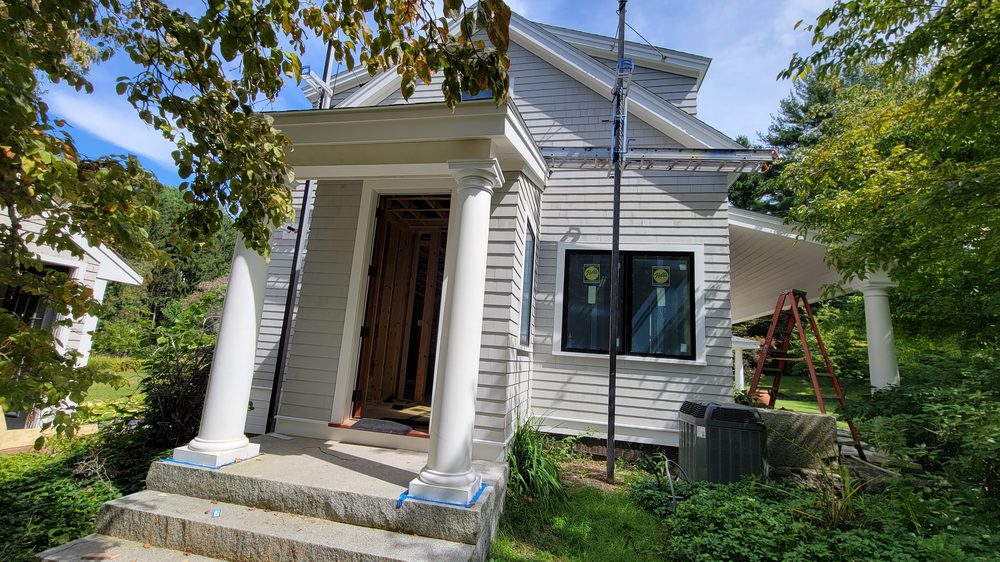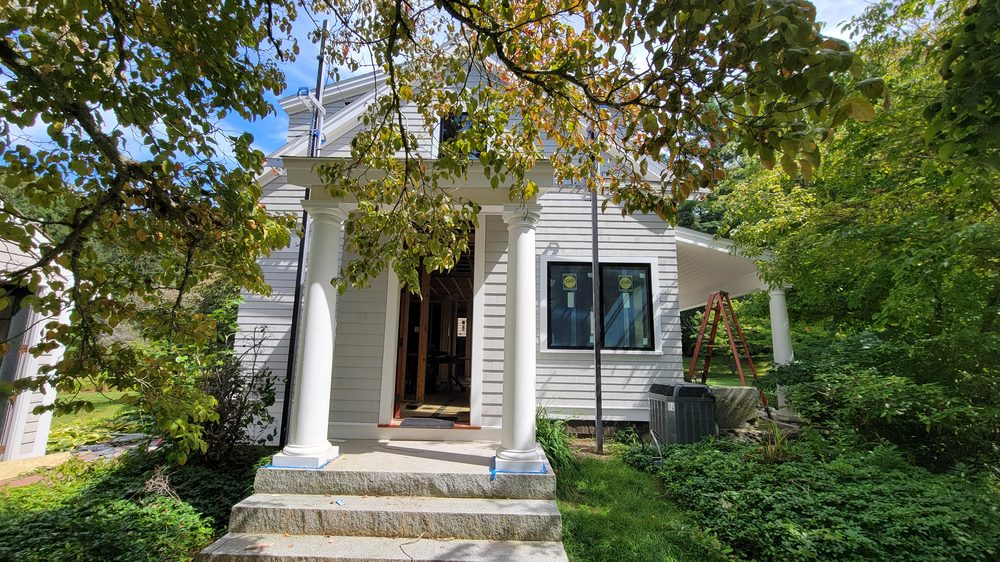
Siding types we install
Boston-area homes wear a range of siding materials, and each has different maintenance and installation considerations. The most common:
- Cedar clapboard. The traditional New England siding. Beautiful when maintained; problematic when not. Requires paint or stain every 5–8 years. Naturally rot-resistant but not rot-proof. Best for historic homes and higher-end residential work where the look is worth the maintenance.
- HardiePlank (fiber cement). Fiber cement siding that looks like wood clapboard but requires no maintenance for 15+ years between paint jobs. Doesn't rot, resists insects, holds paint significantly better than wood. Heavier and harder to install, but the maintenance savings pay off. Our default recommendation for full-house re-sides.
- Vinyl siding. Economical, low-maintenance, wide range of profiles. Modern insulated vinyl performs much better than the vinyl of 30 years ago. Best for homes where the goal is minimum maintenance at reasonable cost.
- Cedar shingle. Sidewall shingles for coastal and shingle-style homes. Ages beautifully to a silver-gray if left unfinished, or can be stained to hold a specific color. Higher install cost than clapboard but exceptional longevity.
Trim, soffit, and fascia
The trim work around the roofline — the soffit (underside of the roof overhang) and fascia (the vertical board at the roof edge) — is where most water damage starts on New England houses. Ice dams push water up under the shingles, it works its way behind the fascia, and the wood underneath rots.
Our default trim material for exposed exterior work is PVC (Azek). It doesn't rot, doesn't warp, holds paint indefinitely, and looks identical to painted wood once installed. The upfront cost is higher than pine but the long-term maintenance is dramatically lower.
Where PVC doesn't work is on visible profile trim on historic homes — the material machines slightly differently than wood and some period profiles are hard to match. In those cases we use finger-jointed pine or Spanish cedar, primed on all six sides before installation.
Soffit vents and continuous soffit venting matter more than most homeowners realize. Proper attic ventilation prevents ice dams and extends the life of the roof and the siding. When we do a soffit rebuild we ensure the venting is adequate.
How a siding installation goes
A full re-side is a multi-week project. The sequence: strip existing siding, evaluate and repair the sheathing, install a weather-resistive barrier (WRB), flash all penetrations (windows, doors, vents, hose bibs) with tape and metal flashing, install furring or rain-screen if specified, install the new siding starting from the bottom, install trim, caulk all seams, and paint (if not pre-finished).
For a typical single-family house, that's 3–5 weeks of work depending on size, complexity, and material. HardiePlank is faster to install than cedar because it comes in longer boards and doesn't require pre-priming.
The most important step is the WRB and flashing. Water management behind the siding determines whether the wall stays dry. We install house wrap and tape every seam and every penetration. Corner details and window head flashing get particular attention.
Common exterior problems we repair
- Rotted trim at the roofline. Fascia, soffit, rake boards. Usually ice dam damage. Requires evaluating and often replacing the underlying sheathing before new trim goes on.
- Failed caulk and open joints. Where trim meets siding, at corners, around windows and doors. Water infiltrates over time and damages what's underneath.
- Wood rot at horizontal surfaces. Water table trim, window sills, bottom of trim boards. These are the first spots to fail on any painted wood exterior. Replacement in PVC or high-quality primed wood.
- Corner boards pulling away. Usually a fastening failure or wood movement over years. Sometimes indicates larger sheathing issues underneath.
- Failed original stain or paint. Peeling, flaking, exposed wood. Requires scraping, sanding, priming, and repainting — sometimes just cosmetic, sometimes revealing deeper problems.
Permits
Re-siding a house generally doesn't require a permit in most Massachusetts municipalities, as long as you're not changing the exterior envelope structurally. Historic districts are the exception — any visible facade change requires historic commission review. We handle that filing when applicable.
Recent projects