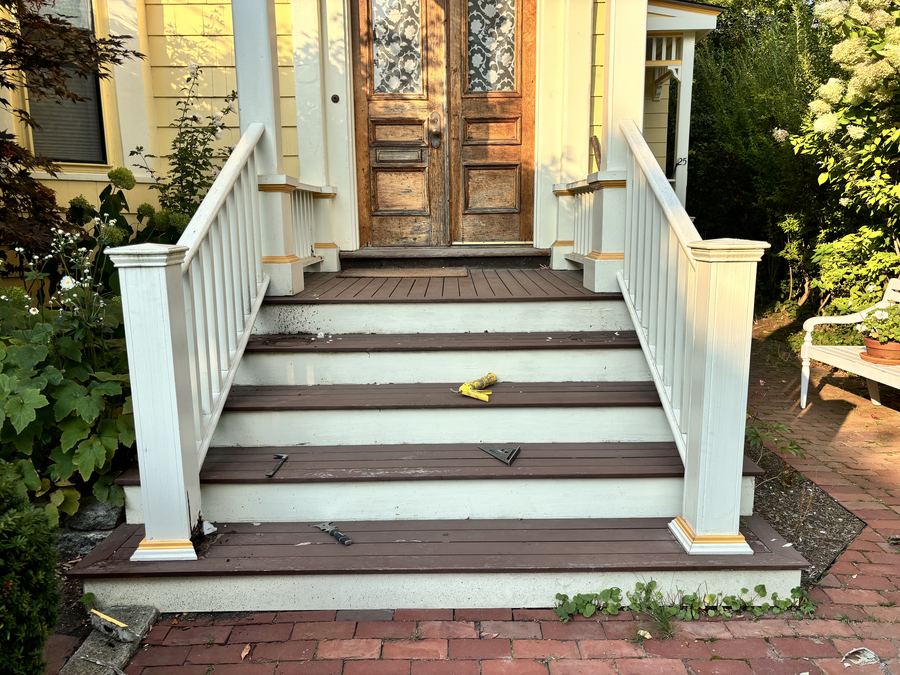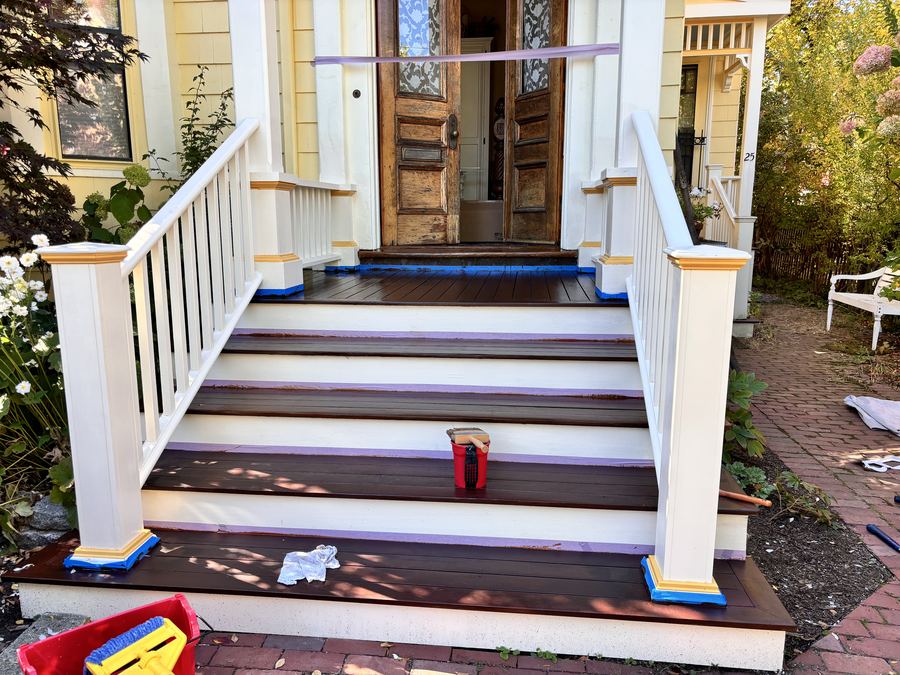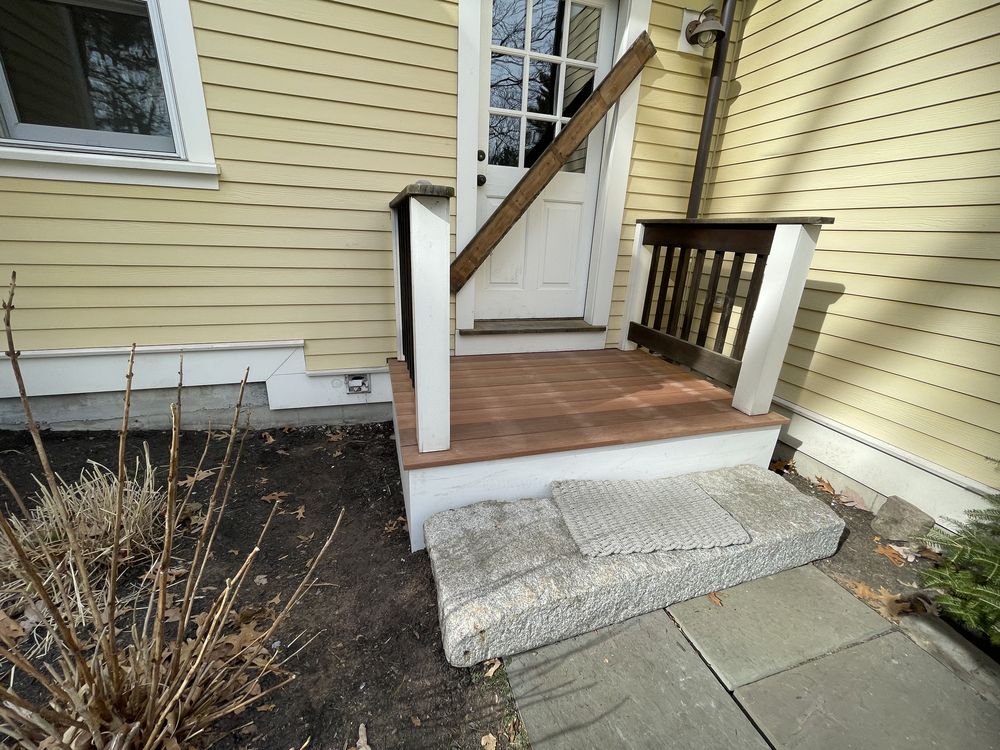
Porches in the Boston area — what we build and repair
Boston-area porches come in a few forms, each with its own considerations. Front stoops and small entry landings on colonials and capes. Full-width farmer's porches on older single-families. Screened three-season porches added to the back of the house. And the classic three-decker porches you see across Somerville, Dorchester, and Roxbury — often stacked two or three high.
Each type has its own failure patterns. Front stoops rot at the column bases where water pools. Farmer's porches lose their tongue-and-groove flooring after 30–40 years of moisture. Three-decker porches often have historic detailing that needs to be matched — and sometimes historic-district approval.
Materials we work with
- Framing: Pressure-treated southern yellow pine for anything in contact with concrete or exposed to the elements. Kiln-dried or KDAT (kiln-dried after treatment) reduces warping.
- Flooring: Traditional tongue-and-groove Douglas fir or mahogany for painted porches. PVC (Azek) for maintenance-free installations. Composite for covered porches where the look is less critical than durability.
- Columns: PVC or fiberglass for exterior use — real wood columns rot at the base without exception. We install PVC column wraps over structural PT posts for the traditional look with modern durability.
- Roof and ceiling: Beadboard PVC or primed pine for painted ceilings. Standard shingle roof to match the house.
- Railings: Traditional milled-baluster designs in PVC or cellular vinyl for historic-looking porches. Aluminum or composite for modern homes.
Common porch problems we repair
- Rotted column bases. Almost always. If you see peeling paint at the bottom of a wood column, there's rot underneath. We remove the column, evaluate the load path, and rebuild with a proper base flashing detail so it doesn't happen again.
- Sagging porch roof. Often a beam issue — the beam over the columns has undersized bearing, or the connection to the house is compromised. Requires investigation.
- Rotted porch decking. Especially at the perimeter where water runs off. We can spot-replace boards or do a full deck replacement depending on how bad it is.
- Water damage in the porch ceiling. Usually a roof or flashing failure. Fixing the ceiling without fixing the source guarantees the problem comes back.
- Loose or damaged railings. Sometimes a straightforward re-secure; sometimes the whole railing has to come off because the balusters are rotted or the top rail is punky.
Permits and historic-district considerations
New porch construction requires a building permit in every Massachusetts municipality. Full porch rebuilds usually do too. Cosmetic repairs — replacing rotted balusters, painting, replacing a single column — typically don't.
Where things get more involved: historic districts. Brookline, parts of Cambridge, Newton Corner, Hyde Park, and several other neighborhoods have local historic commissions that review any change to a house facade — including porches. If your porch is street-visible and the house is in a historic district, we file the paperwork with the commission before the building permit.
The historic commissions aren't difficult to work with, but they add time. Plan on 4–6 weeks of review before construction starts if this applies to you. We handle that filing.
How long a porch project takes
A rotted-column repair with a rebuild of the base flashing takes 2–3 days. Full porch flooring replacement is usually a week. A complete porch rebuild with roof, columns, floor, and railings runs 2–4 weeks depending on size and detail. Historic-district approvals add time before construction, not during.
Recent projects