Repair or replace? How we decide
The honest answer is: it depends what we find under the deck. A 20-year-old pressure-treated deck with sound framing and some rotted boards is a good repair candidate — replace the boards and the railing and you'll get another decade out of it. A 20-year-old deck with undersized joists, a nailed ledger, and rotted rim joist is a rebuild.
Our rule of thumb: if the cost of repair exceeds 60% of a full rebuild, we recommend the rebuild. You end up with a longer-lasting deck for a small premium, and you're not sinking money into problems that will resurface.
When you call us for a deck repair, the first thing we do is inspect. We check the ledger connection, look at the flashing (or lack of it), examine the footings and posts, sound out the joists for rot, and check railing solidity. You get a written report with photos and a repair scope before anyone commits to anything.
Most common deck problems in Greater Boston
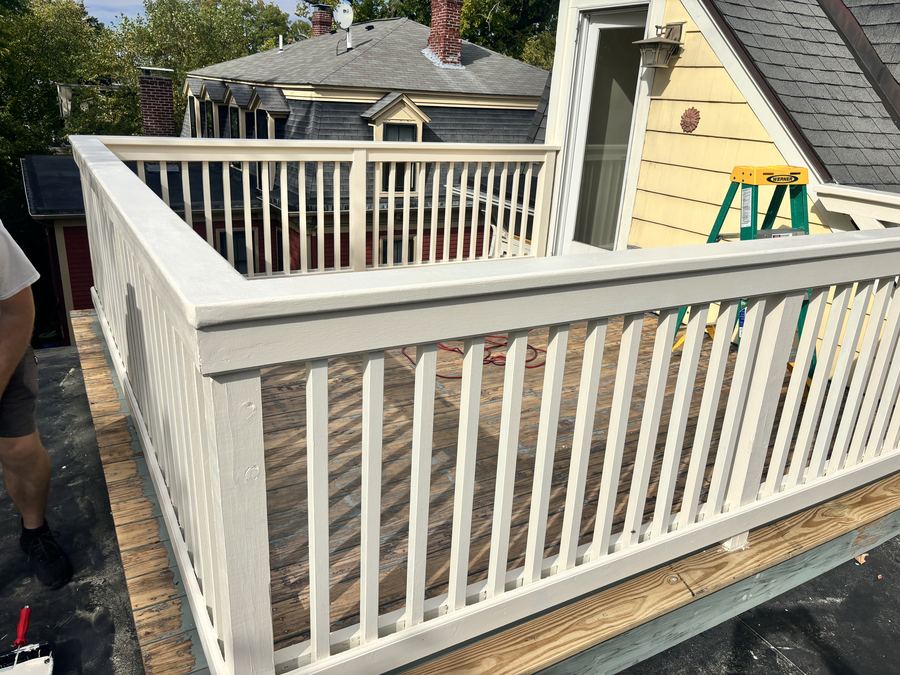
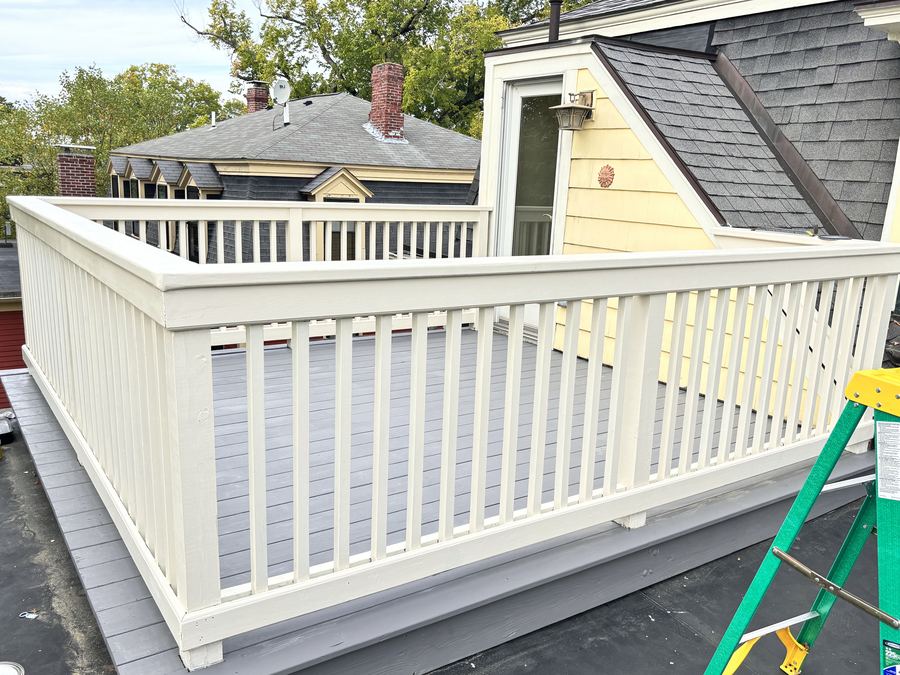
- Loose or wobbly railings. Usually a post-to-rim-joist connection problem. Sometimes it's rot at the post base; sometimes the original install used nails instead of through-bolts. Rebuilding the post connections properly (with structural screws or through-bolts) typically solves it permanently.
- Rotted deck boards. Especially where boards run along the house or under a gutter. Water pools, boards rot from the top down. Replacement boards need to be sourced to match — PT lumber varies in dimension by supplier.
- Ledger issues. If the deck feels like it's pulling away from the house, or you see water stains inside the wall behind the ledger, this is urgent. Ledger failures are the leading cause of catastrophic deck collapses. We remove the existing ledger, evaluate the rim joist, install proper flashing, and re-attach with code-compliant hardware.
- Heaved footings. Common in older decks where footings weren't dug below frost line. The deck moves each winter. Sometimes we can jack and re-support; sometimes new footings need to go in alongside the old ones.
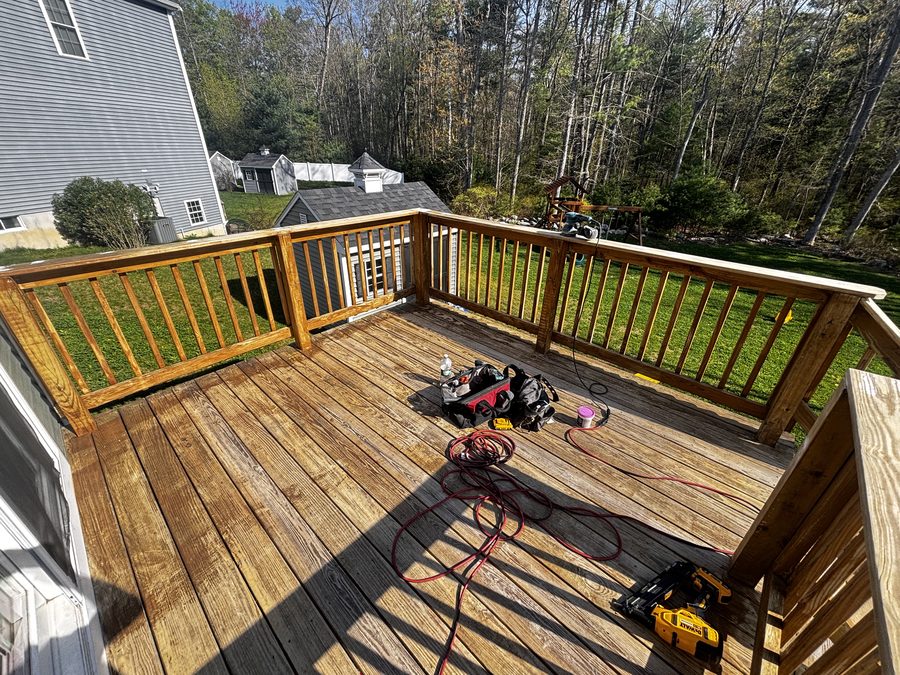
- Weathered finish. Gray, cracking, splintery boards. If the wood is otherwise sound, sanding and re-staining brings it back. Two coats of a semi-transparent oil-based stain typically gets 3–5 years before another coat is needed.
Refinishing an old deck
Refinishing is the least invasive form of deck repair. It's what we recommend when the structure is sound but the surface looks tired. The process runs about three days for a typical deck:
Day one is prep — power-wash to remove dirt and old failing coating, then let dry for at least 24 hours. Day two is sanding — usually 40-grit followed by 80-grit to open the wood grain. Day three is stain application — two coats, allowing dry time between.
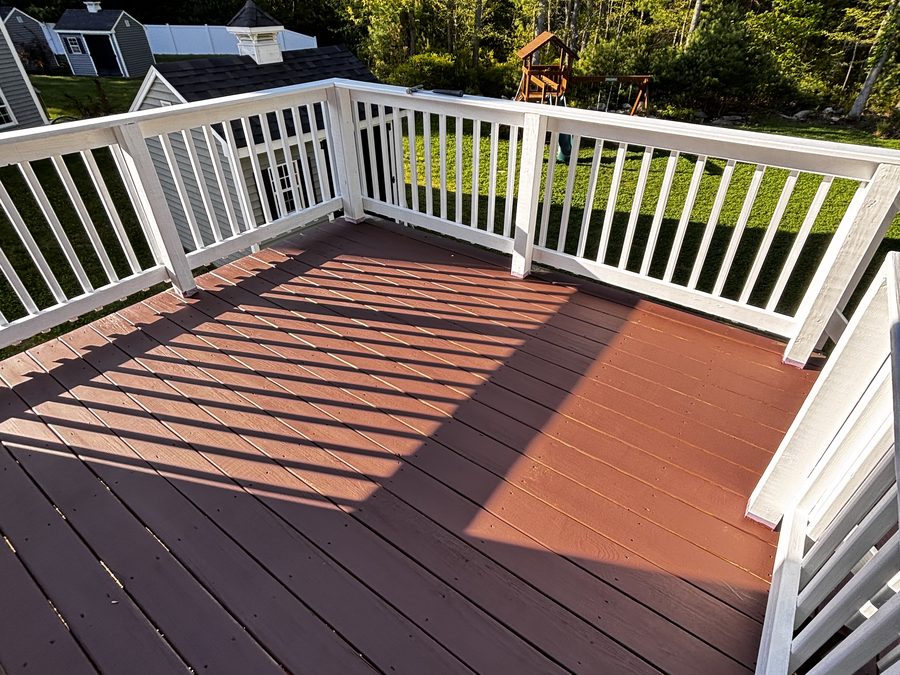
We use oil-based semi-transparent stains for most projects because they penetrate rather than form a film, so they wear evenly instead of peeling. Solid-color deck paint is an option for badly weathered decks where you're covering up damage, but it will need to be recoated every 2–3 years.
When repair requires a permit
Cosmetic repairs — replacing surface boards, refinishing, replacing railings with the same style — generally don't require a permit in Massachusetts. Structural repairs — replacing joists, changing the ledger, adding footings, rebuilding stairs — do require a permit.
We handle the permit application when it's needed and coordinate the inspections. Sometimes what starts as a cosmetic repair reveals structural issues once we open things up. In that case we stop, document what we found, discuss it with you, and either add the permit or scale the scope, depending on what you decide.
Recent projects